Buying Waterfront Property in Miami: Bay, Ocean, and Canal
01 Three kinds of waterfront, three very different purchases
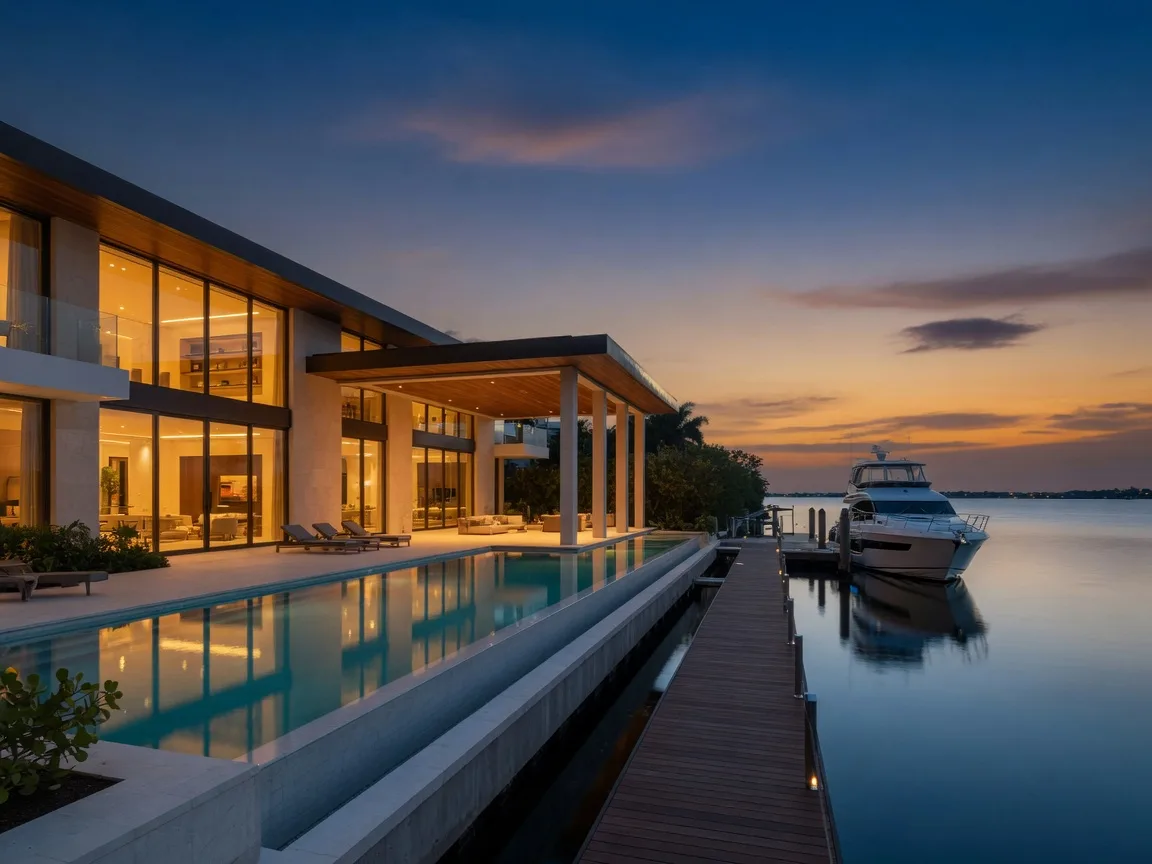
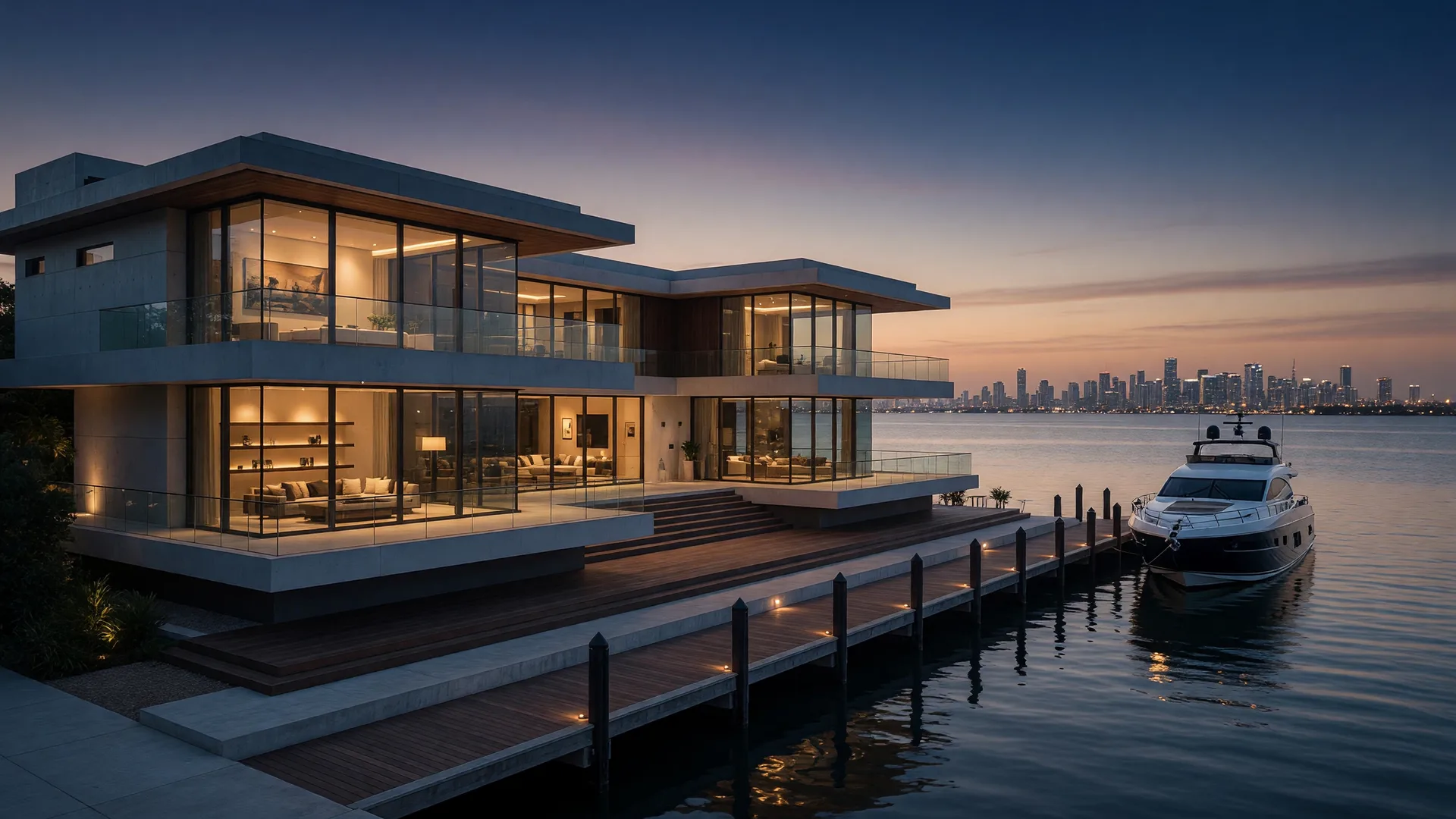
In Miami, the word waterfront covers oceanfront, direct bayfront, and canal homes, and the differences are worth millions. Oceanfront and direct bayfront sit on open water with unobstructed views and command the top of the market. Bayfront can mean the bay is across the street or behind a seawall. Canal homes trade open water for a backyard waterway, where deep-water access and bridge clearance become the prized details for boaters.
The smarter question is not is it waterfront, but what can you actually do on the water: Can a boat reach open water? Is there a fixed bridge with limited clearance in between? What is the seawall doing? The waterfront home buying guide covers the national version of these questions; this guide focuses on the Miami specifics.
02 What drives the price on Miami water
View drives price first: an open bay view outranks a view across a canal, and a home on deep water behind a wide canal outranks a shallow-water gunkhole. Direction matters too, with east-facing water catching sunrise and trade winds. Then comes access: whether a boat can get out, at what tide, and under which bridges.
Neighborhood matters as much as the water itself. Miami Beach waterfront is its own price world, Coconut Grove rewards its rare bayfront and compound inventory, and Miami Shores delivers canal living with private docks at a more approachable price. Russell reads all three, plus the bayfront towers of Brickell, when helping clients compare.
03 Seawalls, docks, and the parts underwater
The most expensive part of a waterfront home is usually the part you cannot see. Seawalls fail slowly and cost tens of thousands to replace. Docks need pilings that survive salt, tide, and storms. Bulkheads settle, and boat lifts and electrical at the dock add maintenance of their own.
This is where the inspector background pays double. Russell looks at seawall alignment, piling condition, and drainage the way most agents look at countertops, and he will tell you honestly when that beautiful boathouse is a liability hiding in plain sight.
04 Insurance and flood zones shape the math
Flood insurance is a fact of waterfront life in Miami, and windstorm insurance costs have reshaped the whole equation in recent years. Your premium depends on the flood zone, the elevation of the home, the age and rating of your roof and windows, and the insurer's appetite for coastal risk, and it can vary sharply between neighboring homes on the same street.
The discipline is simple: price insurance before you fall in love. A few hundred dollars a month of premium can be the difference between a smart purchase and a stretched one, and the quote takes ten minutes to get. Russell asks for it on every waterfront property before an offer goes out.
05 The waterfront buying checklist
When Russell works with waterfront buyers, the checklist is: verify the water access and depth, confirm the seawall and dock condition, price the insurance, check the flood zone and elevation, review the age of roof and impact glass, and compare the property against true waterfront comps rather than neighborhood averages.
Add an inspection that includes marine systems and you have the full picture. If you are ready to search, start a waterfront search and tell Russell you want the water checklist applied to every candidate.
Written by
Russell O'Brien, REALTOR® with One Path Realty
Russell is a Miami Realtor and former professional home inspector working Miami-Dade first and all of South Florida beyond: Broward, Palm Beach, and Monroe. Born and raised in Miami, he writes about what he sees in the market every day.