What to Look For During a Miami Home Inspection
01 Why the Miami inspection is its own animal
A standard inspection walks the same systems everywhere: roof, structure, exterior, HVAC, electrical, plumbing, and interiors. In Miami, the same checklist carries different weight. Humidity is the invisible test every home takes year round, hurricanes set the standards for windows, roofs, and insurance, and our concrete-block construction hides issues differently than the wood-framed homes of other markets.
Russell practiced as a professional home inspector before becoming a Realtor, so he reads a property the way this list is written. His take on the buy-side process sits in the South Florida inspection article, and this is the physical checklist he wants buyers to understand.
02 Roof and exterior: the storm line of defense
Ask what the roof is made of and how old it is. Asphalt shingle roofs in Florida face constant UV and storm wear, and flat or low-slope roofs drain differently than pitched ones. Tile roofs last a long time but hide cracked tiles and aging underlayment, so the surface can look fine while the waterproofing ages out. Flashing, gutters, and roof penetrations are where leaks start.
On the exterior, look for impact-rated windows and doors and ask what is rated versus what is standard glass. The answer affects both your storm protection and your insurance premium. Check stucco for cracking and water staining, and look at the grade around the foundation: water should drain away from the house, not toward it.
03 AC, electrical, and plumbing: the systems that cost you
In South Florida, air conditioning is the true heartbeat of a home, and its age tells you what is coming. A unit in its mid-teens is nearing its useful life regardless of how it sounds today. The inspector should report its age, condition, and any signs of strain, and you should plan for replacement in your budget if it is old.
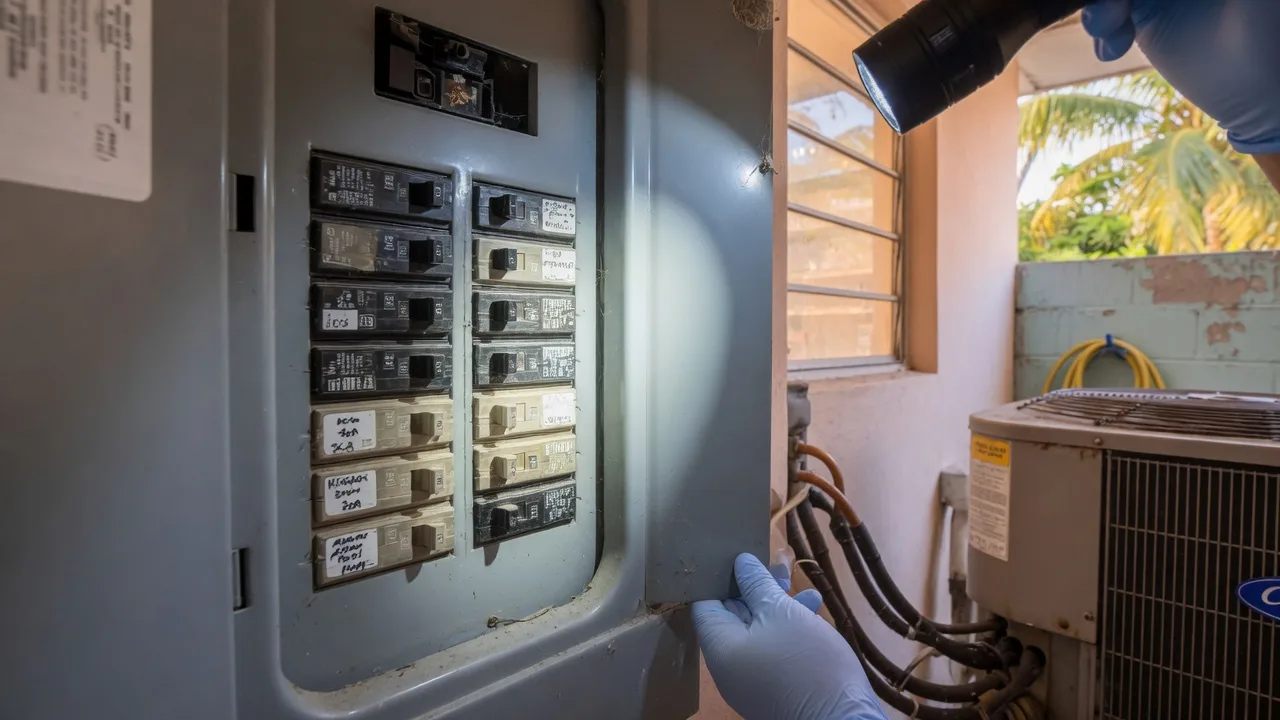
Electrical panels matter enormously here: outdated panels, unpermitted work, and overloaded circuits show up in older homes. On the plumbing side, galvanized pipes from past decades, orangeburg drains, and slab leaks are the costly finds. A good inspector will flag what is nearing its end, not just what is broken today.
04 Water, moisture, and mold
Humidity makes water the most important story in every Miami home. Look for stains under sinks and behind appliances, soft spots in floors and walls, and musty smells in closets and crawl spaces. The inspector should check for moisture intrusion and past leaks, and if there is visible mold or a strong moisture signal, a follow-up mold assessment may be worth its cost.
Russell brings additional expertise in mold assessment from his inspector years, which means he takes the moisture findings seriously and tells you which ones matter for your health, your wallet, and your resale.
05 Termites and wood damage
Termites are a local reality, and the report should be explicit: any active infestation, signs of prior treatment, or wood damage from past activity. Old damage that was treated and repaired is common and often a non-issue; active infestation or unrepaired structural damage is a negotiation item or a red flag.
Ask about the treatment history and walk the visible wood yourself: door frames, baseboards, and porches are where signs like mud tubes and hollow sounding wood show up first.
06 Read the report, then negotiate with leverage
The inspection report is your negotiation map. Real issues can justify repair requests, credits, or a price adjustment, and routine wear should not sink a good deal. Knowing the difference is where an agent with an inspector's background earns the conversation: every week Russell negotiates inspection findings with the seller's side, report in hand.
Start your search prepared: talk to Russell about what you are looking for and he will make sure the inspection period works in your favor, not just against the seller.
Written by
Russell O'Brien, REALTOR® with One Path Realty
Russell is a Miami Realtor and former professional home inspector working Miami-Dade first and all of South Florida beyond: Broward, Palm Beach, and Monroe. Born and raised in Miami, he writes about what he sees in the market every day.